Officers

Dexter Sowell, PhD, Chair
Florida Natural Areas Inventory
Florida State University
chair@floridainvasives.org
Lynn Proenza, Past-Chair
Florida Fish and Wildlife Conservation Commission
past-chair@floridainvasives.org

James Leary, PhD, Treasurer
Lead Scientist
Lake & River Ecosystems,
Applied Science Bureau
South Florida Water Management
District
Treasurer@floridainvasives.org
Dexter is currently a Research Scientist with the Florida Natural Areas Inventory (FNAI), a research unit within the Florida Resources and Environmental Analysis Center at Florida State University. Since 2017, he primarily conducts invasive plant surveys across the state on Florida’s public conservation areas, including assessments of invasive plant control efforts, and conducting Early Detection-Rapid Response (EDRR) invasive plant surveys. When available, he assists other FNAI staff in conducting vegetation monitoring, natural community mapping, gopher tortoise surveys, Florida Forever site assessments and conservation easement monitoring.
He is active member of the Florida Invasive Species Council, currently serving on the Board of Directors, and he serves on the Plant List and Symposium Planning committees. He also liaisons with several CISMAs throughout the state.
Before joining FNAI, Dexter worked for several years as a biologist for the Florida Forest Service in southwest Florida, managing invasive species on two state forests. He assisted with the recovery of the red-cockaded woodpecker (RCW) on Picayune Strand State Forest by writing burn prescriptions and conducted needed prescribed burns, as well as mechanically managing heavily fuels in RCW recruitment clusters. He was active with the Southwest Florida CISMA during this time, helping plan and hold the Southwest Florida CISMA Annual Invasive Species Symposium. He also staffed a SWF CISMA booth at numerous environmental events in southwest Florida each year.
Dexter has previously worked with a Tallahassee-based environmental consulting firm as well as Tall Timbers Research Station.
Dexter has a Bachelor of Science degree in Biological Sciences from Florida State University, a Master of Science degree in Biology from Georgia Southern University, and a Ph. D. in Biology from the University of Virginia.
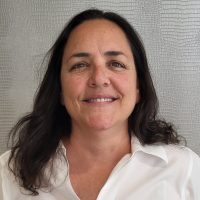
Lynn Proenza received her B.S. in Environmental Science from the University of South Florida in 2003. For the following eight years, she worked in the private sector including land management and environmental consulting. She then received her master’s degree in Forest Resources and Conservation from the University of Florida in 2012. She has over 21 years of land management and field-based work experience in various environmental fields including 13 years of invasive plant management in both the public and private sectors.
James Leary is the Lead Scientist in the Lake and River Ecosystems Section in the Applied Sciences Bureau at the South Florida Water Management District. He has over 20 combined years of experience on the science and application of tropical and aquatic vegetation management. His mission is to enhance macrophyte communities contributing to the quality and habitat of south Florida’s freshwater systems.

Carl “CJ” Greene, Secretary
Florida Fish and Wildlife Conservation Commission
secretary@floridainvasives.org
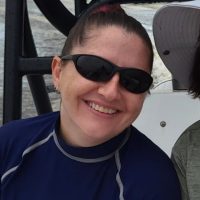
Carl “C.J.” Greene is a Biological Scientist III for the Florida Fish and Wildlife Conservation Commission within the Invasive Plant Management Section and has worked in this capacity for the past 8 years. Mr. Greene is responsible for the management of invasive aquatic plants within the Upper St. Johns River. More specifically, he directs FWC contractors and cooperators for the control of floating plants, creeping water primrose, and any new infestations that may be found. He received his Bachelor of Science from the University of Central Florida in 2001.
Deb Stone is the University of Florida’s Invasive Species Extension Coordinator. She has a long and dedicated history of invasive species and vegetation management in Florida, working with many different organizations across the state- the Florida Park Service, St. Johns River Water Management District, the Nature Conservancy, Hillsborough County and Bok Tower Gardens. She is currently a Doctoral Candidate in Forest Resources and Conservation at UF and received her master’s in the same program in 2017. She is particularly passionate about prioritization, decision support tools, addressing the implementation gap, and fire-invasive plant interactions.
Board Members
Jenna Cole
Invasive Animal Biologist
Land Resources Bureau
South Florida Water Management District
boardmember8@floridainvasives.org
Alexandra “Alex” Onisko
Lead Invasive Species Biologist
South Florida Water Management District
boardmember6@floridainvasives.org

Telmah Telmadarrehei, PhD
Postdoctoral Research Associate
University of Florida
Indian River Research & Education Center
boardmember7@floridainvasives.org

Erick Smith
Co-owner, Kestrel Ecological Services
boardmember3@floridainvasives.org
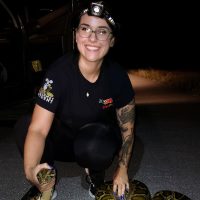
Jenna Cole received her M.Sc. in Wildlife Ecology and Conservation from the University of Florida in 2022. Her primary experience is research and management of Argentine black and white tegus, Burmese pythons, green iguanas, and various other invasive reptilian species throughout South Florida. Currently she is employed as an invasive animal biologist with the South Florida Water Management District assisting in the management of the Python Elimination Program and related invasive species management projects. Jenna’s primary goals are to continue to research and improve management strategies for invasive reptile species.
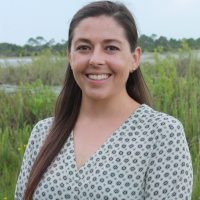
Alexandra “Alex” Onisko is a Lead Invasive Species Biologist with the South Florida Water Management District, specializing in upland and wetland ecosystems. Alex holds a Master of Science with a major in Agronomy from the University of Florida and a Bachelor of Science with a major in Environmental Studies from the University of Central Florida. She has worked in Land Management and Invasive Plant Management since 2011. Among many other responsibilities, Alex is a technical expert in her field and is responsible for project management, research and development of IPM technologies, and is part of a team leading the aerial monitoring of priority invasive plant species across the Everglades.
Telmah Telmadarrehei received her Ph.D. in Forest Resources from Mississippi State University in 2019. In 2021, she began working as a postdoctoral research associate in the University of Florida Entomology and Nematology Department, specializing in biological control of invasive weeds. Her research focuses on integrating biological control with other pest management strategies to control invasive weeds in the safest and most effective way while minimizing non-target impacts. Currently, she is working on controlling invasive plants such as Brazilian peppertree and earleaf acacia. Passionate about environmental conservation and restoring native species, Telmadarrehei is also actively involved in outreach programs to educate and engage the public on invasive species and classical biological control.
Erick Smith is co-owner of Kestrel Ecological Services. KES focuses primarily on treatment of invasive exotic plants in upland and wetland systems across the state of Florida for private landowners and public agencies. Erick received a B.S. in Forestry from the University of Florida. Previous to founding Kestrel in 2007 he worked in the nursery trade, urban forestry/arboriculture, conservation land management and volunteered for two years at a biological research station in the Ecuadorian Amazon. He is chair of the City of Gainesville Tree Advisory Board and loves to camp, hike and canoe with his partner Jane in Florida and Georgia.
Shannon Carnevale
Natural Resources and Conservation Extension Agent
UF/IFAS Extension Polk County
boardmember5@floridainvasives.org
Paul Evans
University of Florida
boardmember2@floridainvasives.org

Padraic Elliot
Florida Natural Areas Inventory
Florida State University
boardmember1@floridainvasives.org

Mariah McInnis
Invasive Plant Management
Florida Fish and Wildlife Conservation Commission
boardmember4@floridainvasives.org
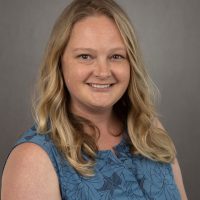
Shannon Carnevale serves as the Natural Resources and Conservation Extension Agent for UF/IFAS Extension Polk County, where she provides research-based education on invasive species management, urban wildlife conservation, and watershed management and health. Through her leadership, she has expanded community engagement initiatives, including citizen science programs, capacity-building workshops for decision makers and land managers, and the award-winning Naturally Florida podcast. With a background in forest management and agricultural education, Shannon is committed to bridging the gap between research and public action to foster a more resilient natural environment.
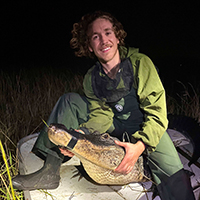
Paul Evans is the Science Writer and Outreach Coordinator with the University of Florida’s Croc Docs research team. The Croc Docs are a team of biologists working to improve the understanding of herpetofauna in South Florida, the Caribbean, and endangered mammals in Central America. He received his MSc. in Ecology and Conservation from the University of Aberdeen, and his bachelors from the University of South Florida. Paul aims to bridge knowledge gaps existing in the conservation field through wildlife education, scientific research, and public engagement. His research goals are in citizen scientist work, morphometric analysis, and geospatial processes. He has aided in improving public perception of lesser studied species and public awareness of understudied species with organizations in Alaska, Scotland, and is excited to continue his work in South Florida.
Padraic (Pay-drick) Elliott is an Invasive Species Field Biologist with the Florida Natural Areas Inventory (FNAI). Tasked with coordinating invasive species surveys with local, state, and federal agencies, he has experience with FISC-listed invasive plant species in most terrestrial ecosystems in a wide variety of ecological condition. When not working with invasive species, Padraic assists with gopher tortoise surveys and rare plant surveys and has prior experience in prescribed fire, ornithology, and herpetology. He received his BS in Biological Science from Florida State University and his MS in Conservation Biology from Texas Christian University.
Mariah McInnis is the Research and Outreach Coordinator for the Invasive Plant Management Section within the Florida Fish and Wildlife Conservation Commission. She also coordinates EDRR efforts within the section statewide. After graduating from Florida State University with a B.S. in Environmental Science, she started her career with IPM working as the regional biologist on Lake Okeechobee. From there, she went on to graduate from Auburn University with a M.S. in Wildlife Science where she researched wild turkeys and the effects of prescribed fire. In 2021 she came back to FWC to work as a gopher tortoise compliance biologist before officially joining IPM again to take on the role of overseeing the sections contracted research with universities, research groups, and federal agencies.